Jewelry chains come in many styles, with different types of chain links creating distinct looks, structures, and uses. Choosing the right one depends on how the chain will be worn and the jewelry design it needs to complement.
Based on styles commonly used in jewelry projects, this guide covers 12 popular chain types for necklaces and bracelets, comparing their features, pros, cons, and tips to choose.
Comparison of Different Chain Links Styles
Below is a quick comparison of the different types of chains, highlighting their style, strength, and ideal uses to help you choose the right option.
| Chain Type | Chain Shape | Strength | Tangle Resistance | Typical Use |
| Tennis Chain |  | ★★★ | ★★★ | Bracelets, necklaces |
| Snake Chain |  | ★★ | ★★★★★ | Necklaces, elegant pendants |
| Figaro Chain |  | ★★★★ | ★★★ | Casual & dress jewelry |
| Wheat Chain |  | ★★★★ | ★★★ | Bracelets and necklaces |
| Box Chain |  | ★★★★ | ★★ | Everyday wear, pendants |
| Rolo Chain |  | ★★★★ | ★★★ | Casual & fashion jewelry |
| Curb Chain |  | ★★★★★ | ★★★ | Popular in men’s & unisex jewelry |
| Bead Chain |  | ★★ | ★★★★ | Keychains, casual wear |
| Cuban Chain |  | ★★★★★ | ★★★ | Statement necklaces, bracelets |
| Rope Chain |  | ★★★★ | ★★★ | Fashion jewelry, pendants |
| Paperclip Chain |  | ★★★ | ★★★ | Trendy, minimalist |
| Cable Chain |  | ★★★★ | ★★★ | Everyday wear, pendants |
Tennis Chain
A tennis chain features a continuous row of individually set diamonds or gemstones, creating an even line of sparkle around the neck or wrist. Unlike link-based styles such as cable or curb chains, its structure is defined by connected gemstone settings. Tennis chains are commonly used for both necklaces and bracelets and can be made in sterling silver, gold, or other jewelry metals.
Pros
- Continuous gemstone setting creates a distinctive, high-impact look
- Ideal for high-end or special occasion jewelry
Cons
- Individual settings require careful construction and stone security
- Gemstone setting generally increases production complexity and cost
Manufacturer Tip
We pay close attention to stone spacing and the movement between each setting. The connections need enough flexibility for the chain to sit smoothly, while keeping every stone secure and aligned.


Source: Pinterest
Snake Chain
A snake chain is made up of round, twirly metal rings that are connected to form a flexible tube with a smooth, scaly surface that resembles snake skin.
Snake chains, also called Brazilian chains, are usually worn alone or with single, small pendants. Unlike traditional chains, which are made up of a series of connected rings, snake chains are made up of tiny, curved plates that are closely woven together. What you’ll get is one continuous chain with no obvious breaks. As a result, the surface is extremely flexible and smooth, making it quite comfortable for wearing as a single chain around the neck. The name “snake chain” refers to the scaly surface of the chain.
Pros
- Durable and resistant to kinking, comfortable to wear
- Modern and stylish with a unique texture
Cons
- Can be prone to catching on clothing or hair
- Limited flexibility compared to other chains
Manufacturer Tip
Sharp bends can leave permanent kinks in a snake chain, so careful handling matters during both production and packing. Avoiding tight folds helps protect its smooth, continuous shape.


Source: Pinterest
Figaro Chain
Originating in Italy, the Figaro chain features a pattern of two or three small circular links followed by one elongated oval link. Popular among men, these chain link types are often paired with pendants like crucifixes or medallions, making them versatile for both casual and formal styles.
Pros
- Stylish and distinctive
- Stronger than many decorative chains
Cons
- Pattern limits its pairing with certain pendants
- Can twist during wear, affecting appearance
Manufacturer Tip
The repeating pattern should stay consistent throughout the chain. Even small variations in the spacing between short and elongated links can become noticeable in the finished piece.


Source: Pinterest
Wheat/Spiga Chain
The strength and rigidity of wheat chains are provided by a network of long, thin, teardrop-shaped links that all point in the same direction.
From a distance, a wheat chain resembles a rope chain. The links are entwined together to form a splendidly attractive necklace. The rigidity of wheat chains also makes them very durable.
Pros
- Elegant, durable, and flexible
- Holds shape well
- Ideal for both pendants and standalone wear
Cons
- Complex design can make cleaning harder
- Prone to snagging on fabrics
Manufacturer Tip
Consistent interlocking tension helps a wheat chain maintain an even appearance and natural drape. Sections that are too tight or loose can affect both its look and flexibility.


Source: Pinterest
Box Chain/Venetian Chain
Box chains, as the name implies, are chains made up of little box-like links. These chains acquire their name from their distinctive links, which are different from the standard rounded links seen in other chains. They are manufactured from spherical wires that have been flattened and fashioned into a sequence of square-shaped links. Pendants look fantastic on box chains, but make sure the bail is large enough to accommodate the chain.
Pros
- Strong and doesn’t easily break
- Modern design, suitable for both men’s and women’s jewelry
Cons
- Less flexible than other chains
- Can feel stiff compared to more flexible chains
Manufacturer Tip
Uniform square links and precise alignment help a box chain sit evenly without twisting. For pendant designs, we also check that the chain and end fittings work smoothly with the pendant bail.


Source: Pinterest
Rolo Chain/Belcher Chain
Rolo chains, also known as belcher chains, are a popular redesign of cable-link chains. They are made up of round or oval links on the outside but flat on the inside. They are smaller and thicker than standard cable chains, giving them a more robust appearance. They are commonly worn as a bracelet but can also be worn as a necklace.
Pros
- Balanced and sturdy look
- Popular in charm bracelets
Cons
- Basic design may feel less unique
- Links may twist, affecting the chain’s look
Manufacturer Tip
Consistent link diameter and wire thickness help maintain the balanced look of a rolo chain. For pendant designs, the bail should also move smoothly across the rounded links without catching.


Source: Pinterest
Curb Chain
A curb chain is a chain that has had its links twisted, creating a tight, interlocking connection. Its name derives from the fact that this particular type of chain was first used to curb or rein in a horse by securing it under the jaw.
Both men and women enjoy wearing these chains, which are highly flexible and come in a variety of thicknesses. Curb chains have been around for decades and come in a number of styles, such as the rounded curb, flat curb, closed curb, and open curb.
Pros
- Very durable and strong
- Lays flat and comfortable on skin
Cons
- Shows fingerprint easily
- Links can twist if not properly maintained
Manufacturer Tip
Link alignment is especially important for a curb chain to lie flat. We check the twisting angle throughout the chain to reduce rolling or lifting when the piece is worn.


Source: Pinterest
Bead Chain/Ball Chain
These are chains with balls linked together by connector bars. These balls may be either solid or hollow to reduce weight. Ball chains are reasonably flexible and go well with pendants. These necklace chains types are often used for dog tags, keychains, or lightweight pendants.
Pros
- Lightweight and easy to wear
- Popular for dog tags and keychains
Cons
- Fragile—beads can detach
- Not suited for heavy pendants
Manufacturer Tip
The connections between the beads are key stress points, especially on finer ball chains. Consistent bead size and spacing also help maintain an even appearance across the full length.


Source: Pinterest
Cuban Chain
The Cuban chain is a modern evolution of the curb chain with thicker, rounder, and more tightly packed links. Known for its bold presence, it’s a staple in urban and hip-hop jewelry styles. The Cuban chain is one of the most trending types of gold chains and silver chains.
Pros
- Heavy-duty and extremely durable
- Strong enough to stand alone without a pendant
Cons
- Can be too chunky for subtle or feminine styles
- May be expensive due to weight and width
Manufacturer Tip
We closely control link size, alignment, and polishing because inconsistencies are easy to notice in tightly interlocked Cuban links. For wider chains, we also balance weight with enough flexibility for comfortable wear.


Source: Pinterest
Rope Chain
The rope chain is made by twisting metal segments to mimic the look of a genuine rope. lt has a shiny, textured look and is durable and strong. These chains vary by the thickness and tightness of the braid or weave.
Pros
- Extremely strong and reliable
- Great for both pendants and standalone wear
Cons
- Difficult to repair if broken
- Heavier versions may feel weighty
Manufacturer Tip
Very fine rope chains can be more prone to tangling, while open-link versions may be easier to pull apart under tension. A slightly thicker chain can help reduce tangling, while a closed-link construction offers better resistance to pulling.


Source: Pinterest
Paperclip Chain
Paperclip-style chain, also known as elongated box or elongated cable, has round or oval links that are stretched to make the appearance longer and narrower. It’s a trending style in fashion jewelry and is especially popular for layering necklaces due to its open, airy look.
Pros
- Great for layering or wearing alone
- Minimalist, lightweight and comfortable
Cons
- Less robust than tightly linked chains
- May tangle or snag easily
Manufacturer Tip
Elongated links make differences in shape and proportion particularly visible. We match the wire thickness to the link size to help reduce unwanted bending or deformation.


Source: Pinterest
Cable Chain
Cable chain is created from perpendicular round or oval links that are exactly the same and connected together. The links of the chain can be fattened so that the chain is fat. Its simplicity makes it the backbone of many jewelry designs.
Pros
- Timeless and versatile
- Durable and low-maintenance
Cons
- Plain design lacks uniqueness
- Prone to tangling
Manufacturer Tip
For finer cable chains, we pay close attention to link thickness and make sure the joints are properly closed. We also match the chain construction to the expected pendant weight to reduce link deformation.


Source: Pinterest
Strongest Types of Gold Chain
Some most durable chain styles include:
- Box Chain – Square links create a smooth, sturdy structure.
- Cuban Chain – Thick, interlocking links known for heavy strength and durability.
- Curb Chain – Flattened, interlocking links that lay flat and resist tangling.
- Wheat (Spiga) Chain – Intricately braided links offering both flexibility and strength.
- Cable Chain – Classic oval links; simple, strong, and versatile.
- Figaro Chain – Alternating link pattern with good strength and visual appeal.
- Rope Chain – Twisted links mimic a rope; strong and stylish.
Weak Chains Links Styles
- Snake chains
- Herringbone chains
- Bead/ball chains
- Omega chains
Some chain structures require more careful handling rather than simply being “weak.” For example, snake chains can develop permanent kinks when sharply bent, while fine ball chains may be more vulnerable at their connector points.
Best Type of Chain for a Pendant
When choosing a chain for a pendant, the goal is to complement the pendant without overpowering it — while ensuring the chain is strong enough to support the added weight. Here are some best types of gold chains for pendants:
- Cable Chain
- Box Chain
- Wheat Chain
- Rolo Chain
- Rope Chain
These types of necklace chains are generally sturdy, flexible, and complement various pendant sizes.
The Most Comfortable Chain to Wear
Chain jewelry, while attractive, can be unpleasant at times. Hair twisting or tugging is a common issue or factor that causes discomfort when wearing chains. The clasp, jump rings, and cap are other places where hair or skin can get caught.
Necklace Types That Are Likely to Pull Your Hair
- Herringbone chains
- Snake chains
- Omega chain
Necklace Types That Are Less Likely to Pull Your Hair
- Figaro chains
- Box chains
- Bead chains
- Curb chains
- Mariner/anchor chains
- Cable chains
Most Recommended Types of Chains for Bracelets
Chain bracelets are a great way to match your necklace style. The ideal bracelet chain should be durable, flexible, and stylish for everyday wear.
Popular choices include:
- Curb Chain — Flat, interlocking links offer strength and comfort, perfect for daily wear.
- Figaro Chain — Elegant pattern of long and short links; stylish yet sturdy.
- Cable Chain — Classic oval links; versatile and great for adding charms.
- Rope Chain — Twisted links create a bold, textured look for statement pieces.
- Cuban Chain — Thick, tightly packed links for durability and a bold style.
- Box Chain — Square links with a sleek, modern design that resists tangling.
What Affects a Jewelry Chain’s Durability?
Chain style is only one part of durability. Two chains with the same link pattern can perform differently depending on their dimensions, construction, metal, and connection points. Key factors include:
Clasp Type
The clasp plays a crucial role in the overall strength and security of a chain, thus it’s crucial to learn different types of jewelry clasps. A weak or poorly constructed clasp can be the first point of failure, regardless of how strong the rest of the chain is. Lobster clasps and spring rings clasps are generally considered more secure, durable and widely-used. A sturdy clasp ensures the chain stays fastened during daily wear and minimizes the risk of accidental loss.
Link
The type of link in a chain determines the extent of its flexibility, and solid objects are more likely to break if they have little or no flexibility. Thus, links that do not allow the chain to move freely or flexibly reduce the chain’s strength and durability. Similarly, chains with permissive links are less likely to snap or kink.
Examples of chains with links with little flexibility are snake and herringbone chains. While examples of chains with flexible links include anchor, curb, cable, and Figaro chains.
Metal Type
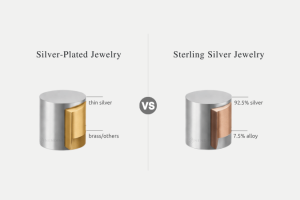
The type of metal used in the chain’s construction greatly influences its strength. Stronger metals, such as stainless steel, platinum, sterling silver, and solid gold, provide strength and endurance to a chain, but less strong metals, plated metals, and hollow metals do not.
Metal Thickness
The strength and resilience of a chain are also significantly influenced by its thickness. Larger links included in thicker chains make them more durable and reduce the risk of bending or snapping.
At Nendine, our chains undergo rigorous quality control, such as tensile tests to ensure they do not break easily under normal use. This process ensures that every chain we deliver balances beauty with strength, giving wearers confidence in both style and security.

Chain Selection Tips for Jewelry Brands
Curating the right chain selection enhances your brand identity, product appeal, and customer satisfaction. Here’s how to choose wisely:
Balance Durability and Aesthetics
Offer types of gold chains for luxury, types of silver chains with anti-tarnish coatings (tarnish free coating like rhodium plating and e-coating), or stainless steel chains for budget-friendly durability.
Machine-Made vs. Handmade Chains
Machine-made chains are budget-friendly with fast production, but less durable and more prone to breaking. Handmade chains, however, created through mold-making, offer exceptional durability and craftsmanship but may take a longer production time.
Define the Purpose
Match chains to the jewelry’s intent. Delicate chains (e.g., Snake or Paperclip) work for layering or dainty pendants, while sturdier styles like Wheat or Cuban Link suit bold statement pieces.
Offer Variety in Lengths and Widths
Include multiple lengths (16″, 18″, 20″, 22″+) and chain thicknesses to suit layering trends and individual styles. Add a necklace size guide to your website to help customers visualize fit and reduce returns.
Conclusion
Because of their timeless elegance, chains, whether as necklaces or bracelets, are key parts of jewelry today. Whether you’re choosing necklace chains types for pendants or bracelet chain types for daily wear, understanding their pros, cons, and strengths ensures you pick the perfect piece. Use this guide or contact an expert custom jewelry manufacturer to navigate the world of jewelry chains and elevate your collection with confidence.