A US-based jewelry startup came to Nendine with a clear goal: develop a small, commercially ready necklace collection for an upcoming Mother’s Day launch window.
This was their first venture into jewelry manufacturing, although the founders already had experience in the beauty industry (eyelash business).
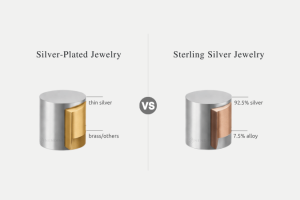
Their original plan was gold-filled jewelry because of its reputation for tarnish resistance. After reviewing their price target, quality expectations, and design needs, we recommended a more practical solution:
- Sterling silver base designs
- 3-micron gold-plated over a sterling silver base
This gave them the premium look they wanted while keeping the collection sells. We then translated their concept into detailed CAD modeling to validate structure and production feasibility before moving into sampling.

A Hidden Subtle Structural Issue: The “Flipping” Amethyst
One design featured multiple amethyst stones set into a lightweight chain structure, including a larger center stone and smaller side stones.
At first glance, everything looked right. The sample matched the CAD file, proportions were clean, and the setting looked polished. But once tested in motion, a hidden issue appeared.
During wear simulation, we found the stones could rotate slightly. As the necklace moved, the smaller stones shifted position and occasionally flipped.
This was caused by:
- Thin chain structure
- Lightweight stone geometry
- A setting angle that did not fully restrict rotation
The larger center stone, connected at the exact midpoint, was also more affected by gravity during movement. It tended to tilt and pull the necklace off balance, increasing flipping.
This type of issue is easy to miss, which is why strict quality control matters, and far more difficult to fix once products reach the market.
How Nendine Fixed the Problem Without Changing the Design Intent?
Rather than altering the visual design, Nendine focused on improving structural stability while preserving the original aesthetic.
After internal evaluation, we proposed a revised engineering solution, which the client approved. This adjustment directly addressed a common wearability challenge in jewelry design: how to keep a necklace pendant from flipping over during movement without changing the overall look of the piece.

1. Stabilizing Smaller Stones: Dual-Sided Bezel Setting
Nendine team redesigned the smaller stone settings using a double-sided bezel structure.
This required more precise tooling, additional production steps, and higher craftsmanship standards. However, it effectively:
- Preserved the minimal design language of the piece
- Prevented unwanted stone rotation
- Maintained a consistent front-facing appearance
2. Rebalancing the Center Stone: Gravity Optimization
For the larger center stone, we refined the connection point by shifting it slightly upward from the exact center to a more top-balanced position. That small shift improved weight distribution and reduced the flipping effect caused by gravity.
Although the change was minimal in structure, it created a clear improvement in stability and overall visual behavior when the piece was worn.
To ensure precision, we updated the tooling and refined the stone-setting process accordingly. This required additional production time and cost, which we chose to absorb internally. From our perspective, solving the issue at its root was more valuable than passing short-term costs to the client. It also strengthened our internal standards for similar designs moving forward.

The Result: Stability, Timelines, and Cost Control
The final solution fully eliminated the stone flipping issue during wear without changing the original necklace design, preserving the intended aesthetic while significantly improving structural stability.
Even with the extra revisions, the collection was completed within the original Mother’s Day timeline.
In parallel, we also optimized the shipping and logistics plan, helping the client avoid unexpected customs-related cost fluctuations, ensuring budget stability for the launch.
The client particularly valued Nendine’s ability to identify a problem they had not anticipated and resolve it proactively without impacting their timeline.


Key Insights for Jewelry Brands
This case highlights an important principle in jewelry development: design and wearability must be evaluated together, not separately. Even subtle structural adjustments can significantly improve real wearing performance, especially in lightweight or multi-stone designs.
Prioritizing functional performance over fixed design details helps prevent issues after launch and leads to a more reliable customer experience. In many cases, embracing small but intentional engineering refinements is what turns a good design into a commercially successful product.
Not Just Manufacturers – We’re Your Dependable Business Partners
This project reflects how we work at Nendine. We do more than produce jewelry from approved drawings. We look for risks, solve problems early, and help brands avoid expensive mistakes after launch.
If you are building a jewelry collection and need technical guidance or dependable manufacturing support, Nendine is here as your custom jewelry manufacturer partner to support your growth.