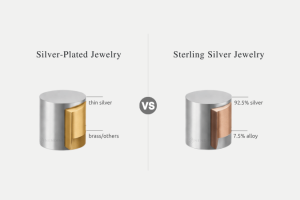
Silver remains one of the most popular precious metals used in making fine jewelry, whether as a surface coating or the primary metal component. Among the many types of silver jewelry options available today, silver-plated and sterling silver remain two of the most in-demand choices. While they may look nearly identical at first glance, these two silver types offer very unique experiences.
This guide explores the major differences between silver-plated vs. sterling silver jewelry, helping you choose the right one for your collection.

What Does Silver Plated Jewelry Mean?
Silver plated jewelry refers to pieces made by adding a thin layer of pure silver over base metal, through a process called electroplating. The thickness of the silver layer (measured in microns) determines how long the finish lasts and how well the jewelry resists wear & tear.
So, is silver plated the same as sterling silver? No. Neither is it the same as solid silver. While it offers the bright look and shine of pure silver, it is only the outer surface that contains silver in most cases.
Common Base Metals Beneath Silver Plated Jewelry
Silver plated jewelry typically uses various base metals underneath the coating. The type of metal used affects the tarnish speed, cost, durability, and skin sensitivity of the jewelry. Common options are:
- Silver Plated Over 925 Silver Base
This jewelry type uses sterling silver as its core metal, then a layer of 999 fine silver is plated on top to enhance its appearance and create a brighter luster. These types of silver jewelry do not tarnish easily and they retain their shine much longer than other plated types. At Nendine, we further apply additional e-coating to improve durability and tarnish resistance.
- Silver Plated Brass Base
Brass is a common base metal used for silver plated jewelry due to its affordability and ease of shaping. However, it oxidizes and tarnishes quickly, and may even cause a greenish skin reaction over time. To make it more durable and tarnish resistant, a specialized e-coating should be applied to the surface layer.
- Silver Plated Stainless-Steel Base
Another base metal that can be plated with silver is stainless steel. Like other base metals, it is quite difficult to apply a silver coating over steel via PVD because silver is highly reactive to air and can oxidize or turn black quickly. So, electroplating is used instead. To improve durability, a transparent e-coating layer is typically added to slow down tarnishing and extend the jewelry’s lifespan.
Silver Plated vs. Sterling Silver Jewelry: What’s the Difference?
Though they look similar, silver plated and sterling silver jewelry differ in composition, durability, tarnish behavior, hypoallergenic characteristics, and market value.
| Feature | Sterling Silver Jewelry | Silver-Plated Jewelry |
| Composition | 92.5% silver alloy | Base metal + silver coating |
| Durability | High | Moderate to low, plating wears off |
| Tarnish | Tarnishes naturally but can be polished and restored | Can tarnish or fade |
| Lifespan | Almost a lifetime with proper care | Months to a few years, depending on plating thickness |
| Hypoallergenic | Generally safe for sensitive skin | Depends on base metal; may cause reactions |
| Value | Higher (precious metal) | Lower |
Material Composition
At its heart, the major difference between sterling silver and silver plated is their composition. Sterling silver jewelry is made primarily by mixing 92.5% pure silver with 7.5% of other metals like copper, zinc, or nickel. Silver plated jewelry, on the other hand, consists of a base metal such as brass or stainless steel, coated with a thin silver layer through electroplating.
Tarnish Behavior
Does sterling silver jewelry tarnish? No, it does not tarnish easily. However, when continuously exposed to air and moisture, its alloy metals react with sulfur in the air and cause a dark, dull discoloration. Yet, even when tarnishing occurs, you can restore the shine by cleaning with a silver polishing cloth. Silver plated jewelry, on the other hand, tarnishes more quickly. As the thin silver layer wears away, the base metal gets exposed to oxidation and possible corrosion.
Durability & Lifespan
Sterling silver pieces are heirloom-quality choices that can last decades or even a lifetime with proper care and occasional polishing. In contrast, the lifespan of silver-plated jewelry ranges from a few months to years. Its durability depends entirely on the plating thickness, frequency of use, storage conditions, and exposure to moisture or harsh chemicals.
Hypoallergenic Characteristics
Sterling silver is generally considered safe for most skin types, especially rhodium plated sterling silver jewelry. But with silver-plated jewelry, skin compatibility depends largely on the base metal. While some brass may cause skin irritation for some people, stainless steel is an excellent hypoallergenic metal that’s completely safe and better suited for those with sensitive skin.
Price & Value
Sterling silver jewelry carries intrinsic value because it contains a significant amount of real silver. Silver plated jewelry, on the other hand, is valued mainly for its appearance rather than metal content, since only the outer layer contains silver. This makes plated jewelry more affordable, but typically less valuable in the long term. Whereas the price difference between solid silver vs sterling silver remains fairly minimal.
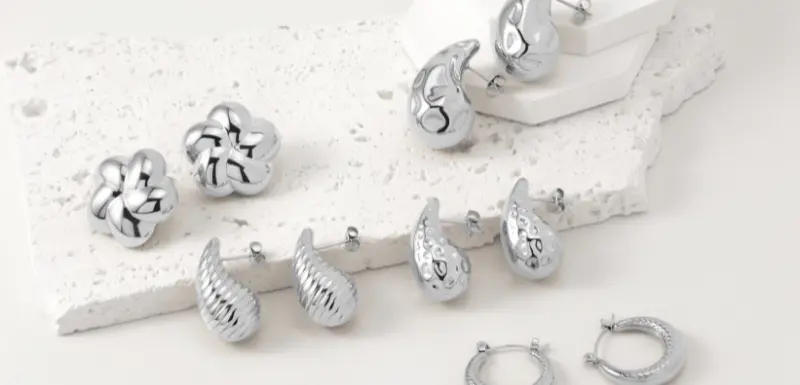
Sterling Silver vs. Silver Plated Jewelry: Which One Should You Choose?
Choosing between sterling silver vs. silver plated jewelry depends largely on your personal style, budget, and how often you plan to wear the piece. While they share a similar aesthetic, their performance over time varies.
Choose Sterling Silver Jewelry If;
- You prioritize longevity: You are looking for heirloom-quality pieces that can withstand daily wear for years to come.
- Sustainability matters to you: You prefer high-quality metals that can be polished, repaired, even recycled, rather than replaced.
- You are investing in quality: You want to build a valuable jewelry line with pieces that retain their intrinsic worth and deliver a true high-end look of precious metal.
Choose Silver Plated Jewelry If;
- You are budget-conscious: You want an affordable way to enjoy the appearance of fine jewelry without the premium cost.
- You love trendy fashion: You enjoy rotating your style frequently and need affordable accessories to match current trends.
- The use is temporary: You only need the piece for a specific event or occasional wear rather than daily use.
Is Sterling Silver Better than Silver Plated Jewelry?
To decide the better option between silver plated vs. sterling silver jewelry, you must consider a few factors, as both jewelry types offer very distinct experiences. However, when you evaluate the pros and cons of sterling silver, it is generally seen as the higher-quality option.
Jewelry pieces made from sterling silver are better in quality, more durable, retain long-term value, and can be polished repeatedly without exposing a tarnished base metal. Also, they don’t tarnish easily.
Silver plated jewelry, on the other hand, is a budget-friendly alternative for trendy or occasional wear. While it is more affordable upfront, its thin silver layer wears off quickly, causing the piece to lose its shine.
Is Silver-Plated Jewelry Real Silver?
After all that has been said, you might be wondering: is silver plated real silver? Yes, it is.
Silver-plated jewelry has a thin layer of real silver on the surface, applied over a base metal like brass or copper. While the coating is genuine silver, it is not considered “real silver jewelry” in full composition. Over time, the layer can wear off, exposing the underlying metal.
How to Tell if Something is Silver or Silver-Plated Jewelry?
How to tell if something is silver or silver plated is simple once you know what to look for. Use these two reliable methods next time you visit the jewelry store.
- Look for Hallmarks
Check for tiny stamps known as hallmarks. For sterling silver, common types of hallmarks and meaning include “925”, “S925”, or “Sterling” which indicate solid silver content. Silver-plated jewelry, on the other hand, often has no hallmark at all or may be stamped with “EP” meaning electroplated or “EPNS” which means electroplated nickel silver.
- Check Wear Areas
Inspect the edges or parts of the jewelry that rub against your skin. If you see yellowish or copper tones peeking through, or if the finish looks uneven and faded, it is likely silver-plating revealing the base metal underneath.
How Long Does Silver Plated Jewelry Last?
The lifespan of silver-plated jewelry depends largely on the thickness of the silver layer, the base metal used, and how often the piece is worn or exposed to water and sweat.
In many cases, tarnish or fading can begin within two to three months of regular use, especially with frequent exposure to air and sulfur-containing substances. However, with careful maintenance and minimal exposure, well-crafted pieces can retain their shine for years.
Conclusion
Understanding the differences between silver plated vs sterling silver jewelry is essential for making an informed purchase that aligns with your preference. While sterling silver offers long-lasting value and durability, silver-plated options provide an affordable way to enjoy high-end styles.
As an experienced custom jewelry manufacturer, Nendine helps you navigate these choices, ensuring every piece you select meets your standards for quality, skin safety, and aesthetic appeal.
FAQs
Yes, silver plated jewelry is good, especially for fashion use. It is also more affordable than 925 sterling silver. Its quality, however, depends on plating thickness and the base metal underneath.
Yes, silver-plated jewelry tarnishes and often faster than sterling silver jewelry. This is because its thin silver layer wears off quickly, exposing the base metal which then reacts with air, moisture, and chemicals to cause discoloration.
Yes, silver plated brass will tarnish as the coating wears off. The exposed brass gets oxidized and sometimes turns green, but proper care and handling can slow down the process.
It depends entirely on the base metal. Pieces with a brass or copper base can turn skin green as they get oxidized, but those with stainless-steel base will not discolor your skin.