Jewelry should make you feel beautiful and confident – not itchy, red, or uncomfortable. If you’ve ever experienced irritation from earrings, necklaces, or rings, you are not alone. Millions of people deal with metal sensitivities that turn pretty jewelries into problem items.
In this guide, we will explore what jewelry is hypoallergenic, best jewelry metals for sensitive skin, and the practical steps to help you shop better.
What is Hypoallergenic Jewelry?
Hypoallergenic jewelry refers to jewelry pieces that are made from metals that are less likely to cause allergic reactions. While they are not 100% allergy-proof, they have a lower likelihood of causing discomfort or skin discoloration. This allows everyone (including those with metal allergies) to be able to wear them without any worry.
Why Do Some People Get Allergic Reactions to Jewelry?
Explained below are major reasons why people react badly to some jewelry:
How Jewelry Causes Contact Dermatitis?
Contact dermatitis is the most common jewelry-related allergy. It occurs when metal ions react with sweat and penetrate the skin, triggering an immune response. Common symptoms include redness, itching, rashes, blisters, or a burning sensation in the affected area.
Experts at the American Academy of Dermatology estimated that more than 18% of people in North America have a nickel allergy, which is the main metal that causes skin reaction. Another study by the Nickel Institute also announced that, on average, 15-16% of women and 3-5% of men are allergic to nickel. This means that there are more people with metal allergies than you possibly think.
Common Triggers of Jewelry Allergies
- Nickel: The most common allergen, often added to alloys to improve strength and shine.
- Brass: A copper-zinc alloy widely used as a base metal, which may trigger skin reactions without proper plating.
- Copper: While it doesn’t usually cause allergic reactions, copper can turn the skin green when it oxidizes.
What Jewelry is Hypoallergenic? Best Hypoallergenic Metals for Sensitive Skin
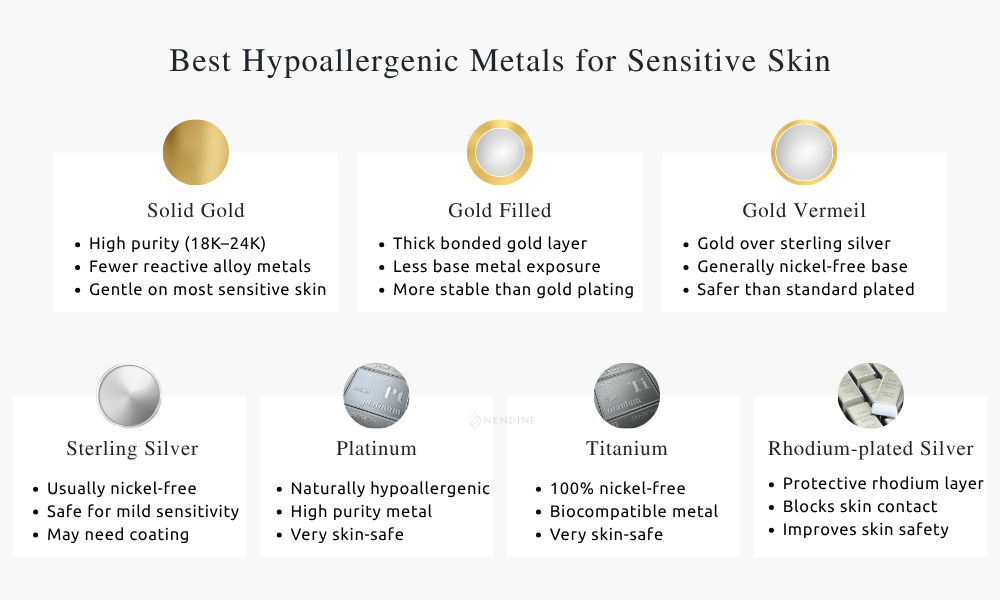
Choosing a jewelry made with the right metal is the best way to prevent these reactions. Below are the top metal options that perform well for hypoallergenic jewelry:
| Material | Hypoallergenic Level | Description | Best For |
| Solid Gold (14K–18K) | High | Higher gold content, fewer alloy metals | Fine jewelry |
| Gold Filled | Medium–High | Thick gold layer reduces skin contact; safer than plated | Semi-fine jewelry |
| Gold Vermeil | Medium | Thick gold layer reduces skin contact | Fashion + semi-fine |
| Sterling Silver (925) | Medium | Typically alloyed with copper instead of nickel, safe | Fashion jewelry |
| Titanium | Very High | 100% nickel-free, biocompatible | Sensitive skin, premium |
| Platinum | Very High | Naturally hypoallergenic | Luxury jewelry |
| Rhodium-Plated Sterling Silver | High | Protective barrier reduces skin contact | Bright silver look with safety |
Solid Gold
24K gold is completely hypoallergenic because it doesn’t contain any alloy metal, but it is soft—making it impractical for everyday jewelry. Other high karat options like 14K/18K solid gold jewelry are safe for sensitive skin. These hypoallergenic gold jewelry designs contain more pure gold and less alloy metal, reducing the likelihood of any discomfort.
Gold Filled
Gold filled jewelry has a thick coating of pure gold (a real layer of 5% gold minimum) that’s bonded to the base metal (usually brass). Because the gold layer is much thicker than normal plating, it lasts for 3-5 years without wearing off. However, it’s important that you re-plate it when the gold layer starts fading off. You don’t want the base metal (brass) to be in direct contact with your skin.
Gold Vermeil
Gold vermeil jewelry consists of sterling silver base metal coated with a thick layer of gold (at least 2.5 microns thick). The sterling silver is nickel-free and the substantial gold layer provides a luxurious look. With the proctective layer of e-coating, this further makes the jewelry less prone to skin reaction.
Sterling Silver
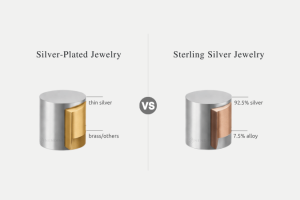
Sterling silver jewelry can be hypoallergenic, which is made of 92.5% pure silver and 7.5% alloyed metals (mostly copper). For hypoallergenic purpose, make sure the alloying metals are within nickel release standard. While it can tarnish over time, it’s safe for many people and works well for daily wear.
For those concerned about tarnishing, explore our detailed guide on What Silver Does Not Tarnish on Jewelry?.
Titanium
Titanium is extremely lightweight, strong, and highly biocompatible. Amongst all the hypoallergenic jewelry metals, titanium is the best-suited for medical implants, meaning you can trust it for delicate pieces like piercings and earrings. It’s naturally nickel-free, corrosion-resistant, and rarely causes reactions.
Platinum
Platinum is widely regarded as the best hypoallergenic jewelry metal. Over 95% of its composition is pure platinum, making it highly resistant to tarnishing and corrosion. While it’s more expensive than other metals, its durability and skin-friendly nature make it a worthy investment.
Rhodium-plated Sterling Silver
Rhodium is a tough compound that adds a bright, white finish over sterling silver while creating an extra barrier against tarnish. Sterling silver with rhodium plating offers long-term protection for sensitive skin, allowing wearers to rest assured that their skin won’t irritate or turn green.

What Jewelry is Not Hypoallergenic? Metals to Avoid
If you have a quick reactive skin, there are a few jewelry you should run from. They include:
- Nickel Jewelry
Nickel is the leading cause of jewelry-related contact dermatitis. It’s commonly found in costume jewelry and cheap peces.
- Brass Jewelry
This is a composition of zinc and copper. It’s usually used as a lower-grade base metal, but oxidizes easily and causes skin irritation. However, with proper plating and handling, brass jewelry is hypoallergenic and safe to wear.
- Copper Jewelry
Pure copper or high-copper alloys can oxidize and cause skin discoloration in sensitive individuals. While not as common an allergen as nickel, it’s still best avoided if you have a history of reactions.
How to Tell If Jewelry is Hypoallergenic?
There is no official “hypoallergenic” certification, so you need to look for good indicators of quality and safety.
Good Signs to Look For:
- Labels or product descriptions that clearly say “nickel free.”
- Jewelry made with nickel-free metals like titanium, platinum, and rhodium-plated sterling silver.
- Jewelry made with higher gold purity (18K and above) and thicker gold plating.
- Custom jewelry manufacturer who produces jewelry meeting EU REACH compliance and Nickel release test reports.
Does Hypoallergenic Jewelry Tarnish?
Whether a hypoallergenic jewelry will tarnish or not depends on the specific metal used, how thick the plating is, and how well the jewelry is maintained over time.
Some hypoallergenic metals like titanium, rhodium-plated sterling silver, and solid gold are highly resistant to tarnishing with minimal maintenance. Whereas, others require more care. For example, sterling silver tends to tarnish over time, but can be restored to its original shine by cleaning it with a silver polishing cloth.
Check for a detailed tarnish-free jewelry guide to learn more about what types of jewelry is tarnish resistant.
Is Nickel-free Jewelry the Same as Hypoallergenic?
NO.
Nickel-free jewelry means that the nickel content is minimal and its release is within the regulated safety limits. What this means is that it’s unlikely to trigger skin reactions or allergies. Wondering what jewelry metals are commonly considered nickel-free? Titanium and solid gold are top options.
Hypoallergenic jewelry is a broader term that means “the jewelry is made from materials that are less likely to cause a reaction.” It doesn’t just talk about nickel; it includes other triggering metals like brass and copper.
So, you can say the end goal is to get nickel-free hypoallergenic jewelry that safe for people to wear.
What Types of Jewelry Brands Should Prioritize Hypoallergenic Materials?
Certain categories of jewelry carry a higher risk if worn for a long time. This includes jewelry pieces that are inserted into the body and those worn by children.
Body Piercing Studios
Fresh piercings are open wounds, so body piercing studios should better use medical-grade metals (like titanium) that have undergone strict quality control and are perfect for body inserts. They prevent infection and long-term sensitivities.
Children and Baby Jewelry Lines
Kids have softer skin and may not be able to communicate discomfort. Thus, it’s recommended that only hypoallergenic jewelry pieces be worn on them. This will reduce the risk of rashes and other skin reactions.
Conclusion
Hypoallergenic jewelry isn’t completely risk-free, but choosing the right metals can greatly reduce irritation. By prioritizing nickel-free, high-quality materials like titanium, solid gold, and rhodium-plated silver, you can enjoy stylish jewelry without compromising comfort or skin health.
FAQs
Yes, stainless steel—especially the surgical-grade type (316L) is hypoallergenic and less likely to cause any discomfort.
Yes, titanium is one of the most hypoallergenic metals available, which is nickel free. It’s lightweight, strong, and perfect for severe sensitivity cases.
Gold plated pieces are not inherently hypoallergenic. Standard gold plating wears off quickly, exposing the base metal (which may contain nickel or brass). For sensitive skin, choose options with a thicker gold layer like gold vermeil or gold-filled.
Yes. Higher-karat gold (18K and above) is generally hypoallergenic because they contain less alloy metals than lower-karat options.
Yes, for most people. It has a thick gold plating (which makes up at least 5% of the jewelry) that prevents direct contact with the base metal.
Unplated brass jewelry is generally not hypoallergenic. Brass triggers reactions due to its copper and zinc content. However, it can become hypoallergenic with proper-coated.
Yes, it is. The sterling silver is plated with rhodium (a tough, white compound) that protects the sterling silver base from touching the skin.
The best earrings for sensitive ears are those made from nickel-free metals like titanium, solid gold, and rhodium-plated sterling silver.
No. A jewelry that turns green is usually caused by copper oxidation in cheaper metals. Quality hypoallergenic metals like solid gold, platinum, and titanium do not cause this issue.